The Fourth Commandment & the Family
Faith Foundations · Honor your father and your mother
The Fourth Commandment · back to top
The Hinge of the Commandments
Where love of God turns toward love of neighbor — beginning at home.
The fourth commandment opens the second table of the Decalogue. It shows us the order of charity. God has willed that, after him, we should honor our parents to whom we owe life and who have handed on to us the knowledge of God.
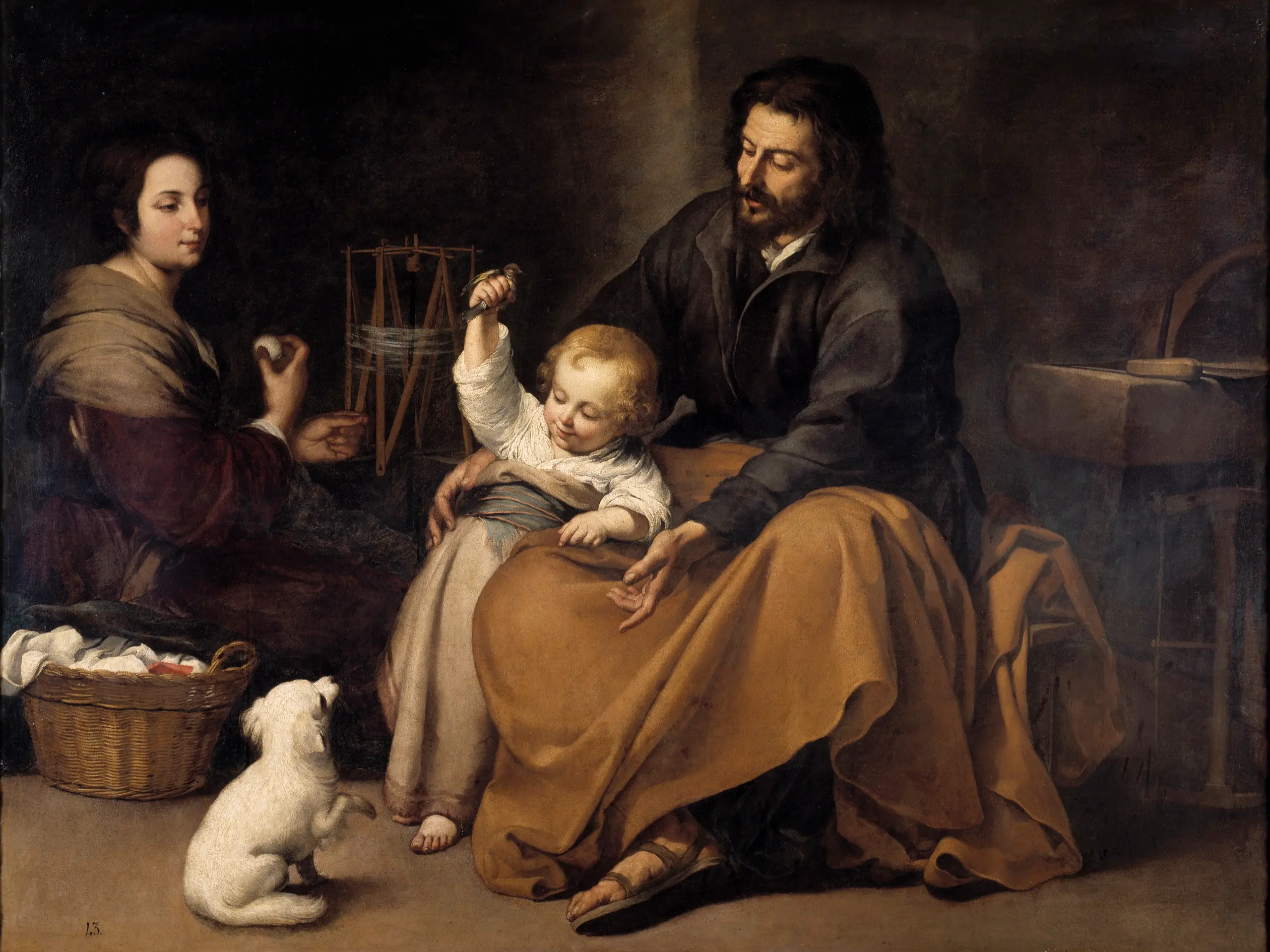
The Christian family is a communion of persons, a sign and image of the communion of the Father and the Son in the Holy Spirit. In the procreation and education of children it reflects the Father's work of creation.
The couple that loves and begets life is a true, living icon – not an idol like those of stone or gold prohibited by the Decalogue – capable of revealing God the Creator and Saviour.
Divine love and human love share one roof. So what, exactly, is the family?
The Fourth Commandment · back to top
What the Family Is
What God made the family to be — for the spouses, for the children, for the world.
The family is the original cell of social life. It is the natural society in which husband and wife are called to give themselves in love and in the gift of life. Authority, stability, and a life of relationships within the family constitute the foundations for freedom, security, and fraternity within society.
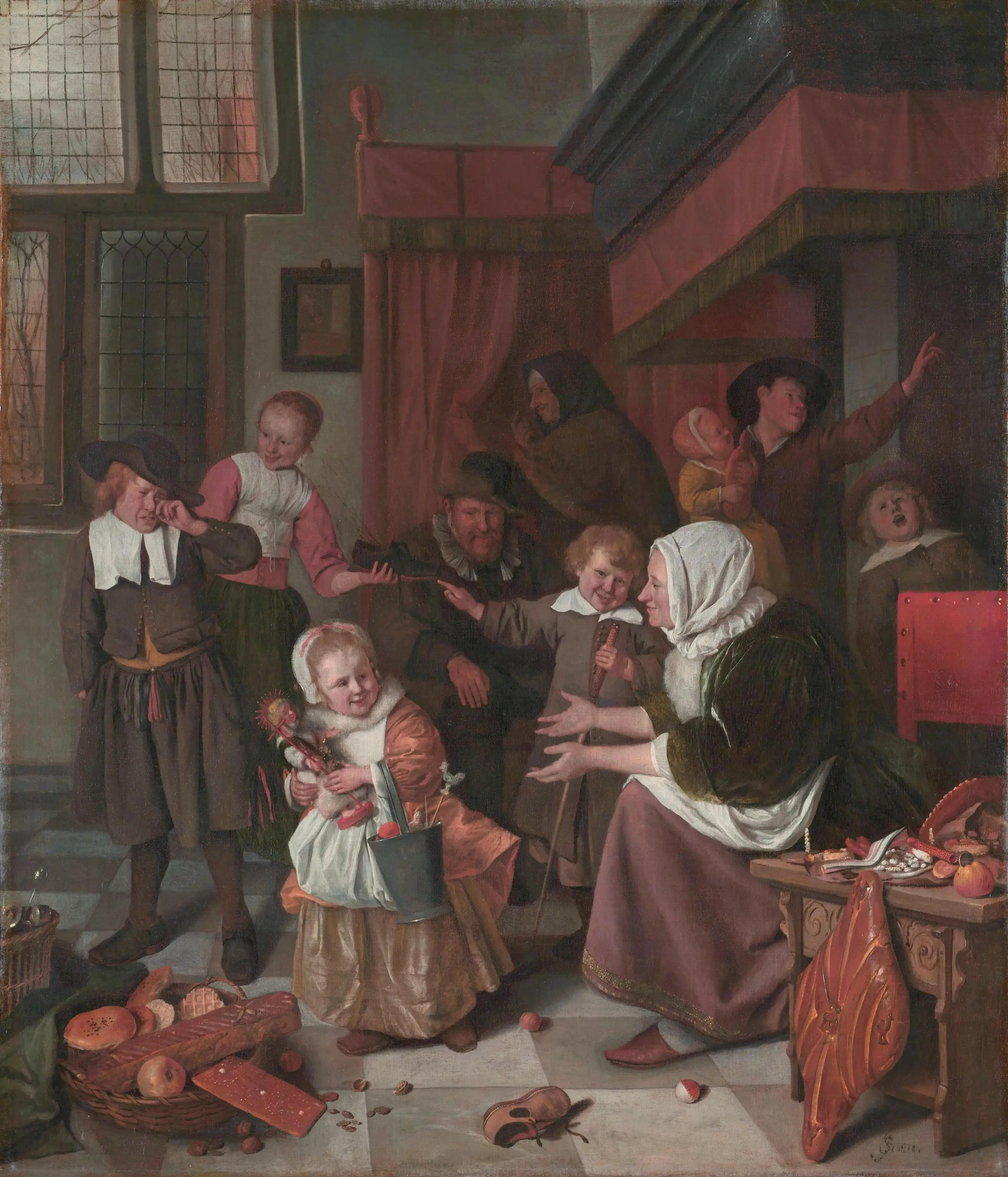
The family should live in such a way that its members learn to care and take responsibility for the young, the old, the sick, the handicapped, and the poor.
The welfare of the family is decisive for the future of the world and that of the Church.
The welfare of the world is decided in ordinary houses like yours. So the commandment assigns real duties — to children and to parents.
The Fourth Commandment · back to top
Duties of Children and Parents
Honor flows both ways: what children owe their parents, and what parents owe their children.
Honor your father and your mother
Before any man is a father, he is a son.
Children, obey your parents in the Lord, for this is right. “Honor your father and mother” (this is the first commandment with a promise), “that it may be well with you and that you may live long on the earth.”
Respect for parents (filial piety) derives from gratitude toward those who, by the gift of life, their love and their work, have brought their children into the world and enabled them to grow in stature, wisdom, and grace.
The fourth commandment reminds grown children of their responsibilities toward their parents. As much as they can, they must give them material and moral support in old age and in times of illness, loneliness, or distress.
It does not speak of parents’ goodness; it does not ask that fathers and mothers be perfect. It speaks about an act of the child, apart from the merits of the parents, and says something extraordinary and liberating: even if not all parents are good and not every childhood serene, all children can be happy…
The first educators
The heavier half of the commandment falls on parents: the education of their children, in virtue and in faith.
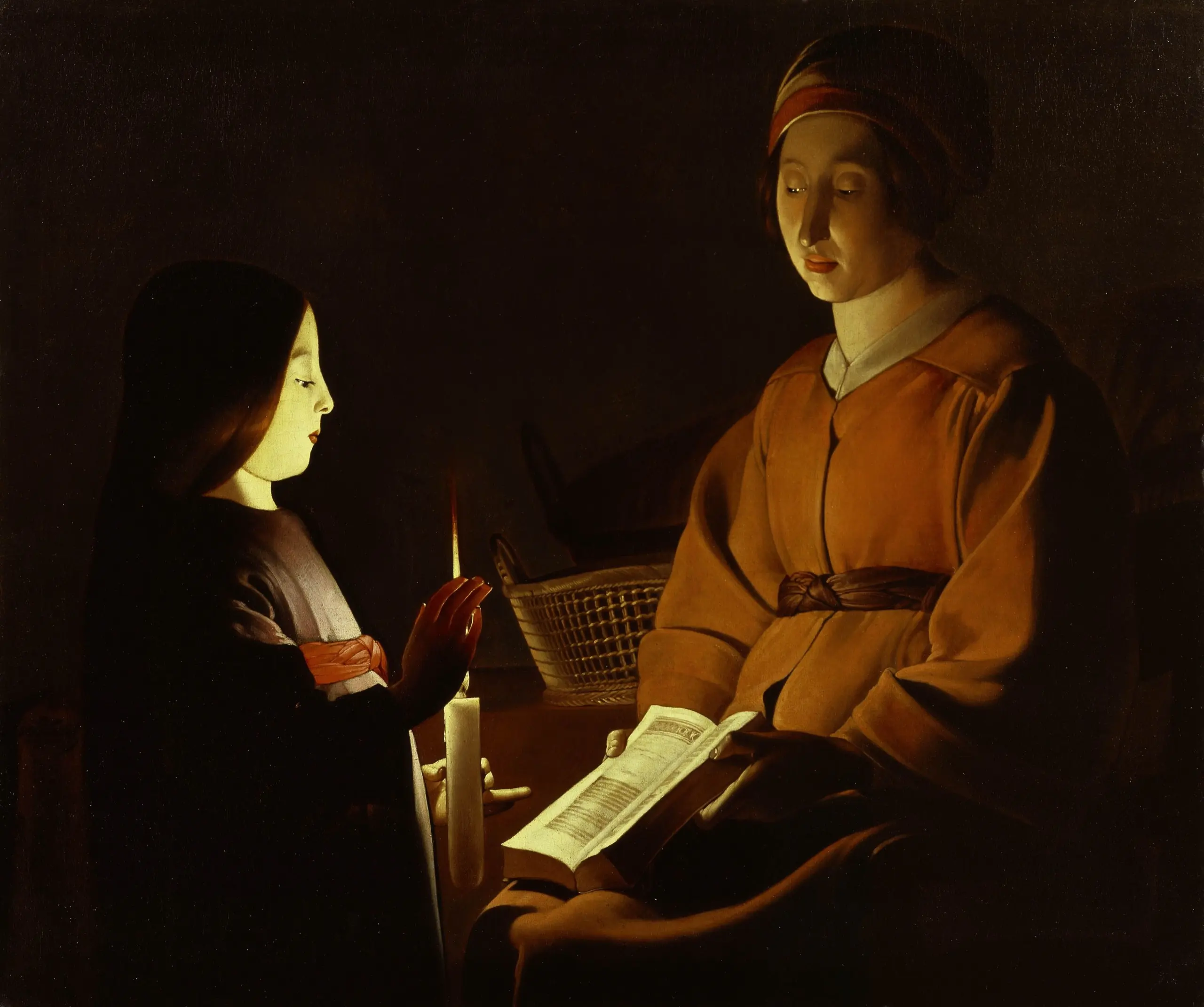
The fecundity of conjugal love cannot be reduced solely to the procreation of children, but must extend to their moral education and their spiritual formation. "The role of parents in education is of such importance that it is almost impossible to provide an adequate substitute."
Since parents have given children their life, they are bound by the most serious obligation to educate their offspring and therefore must be recognized as the primary and principal educators.
Parents have the first responsibility for the education of their children. They bear witness to this responsibility first by creating a home where tenderness, forgiveness, respect, fidelity, and disinterested service are the rule.
Parents should find time to spend with their children, to talk with them. They are the most important thing — more important than business or work or rest.
Parents rely on schools to ensure the basic instruction of their children, but can never completely delegate the moral formation of their children to others.
Through the grace of the sacrament of marriage, parents receive the responsibility and privilege of evangelizing their children. Parents should initiate their children at an early age into the mysteries of the faith of which they are the "first heralds" for their children. They should associate them from their tenderest years with the life of the Church.
Family catechesis precedes, accompanies, and enriches other forms of instruction in the faith. Parents have the mission of teaching their children to pray and to discover their vocation as children of God.
Teach them to pray, and lead them to the sacraments: no salary buys a substitute for that.
The Fourth Commandment · back to top
A School of Prayer
Of everything parents hand on, prayer is handed on first at home — learned the way children learn everything there: together, daily, by example.
The Christian family is the first place of education in prayer. Based on the sacrament of marriage, the family is the "domestic church" where God's children learn to pray "as the Church" and to persevere in prayer. For young children in particular, daily family prayer is the first witness of the Church's living memory as awakened patiently by the Holy Spirit.
Children learn to place God first and foremost in their affections. They learn to see God as their Father and Mary as their Mother and they learn to pray following their parents' example.
And you, fathers, do you pray with your children, with the whole domestic community, at least sometimes? Your example of honesty in thought and action, joined to some common prayer, is a lesson for life, an act of worship of singular value. In this way you bring peace to your homes: Pax huic domui. Remember, it is thus that you build up the Church.
Night prayers
The Church gives every day a rhythm of prayer, and the family’s hour is the evening. A few short prayers together each night outlast any single grand gesture.
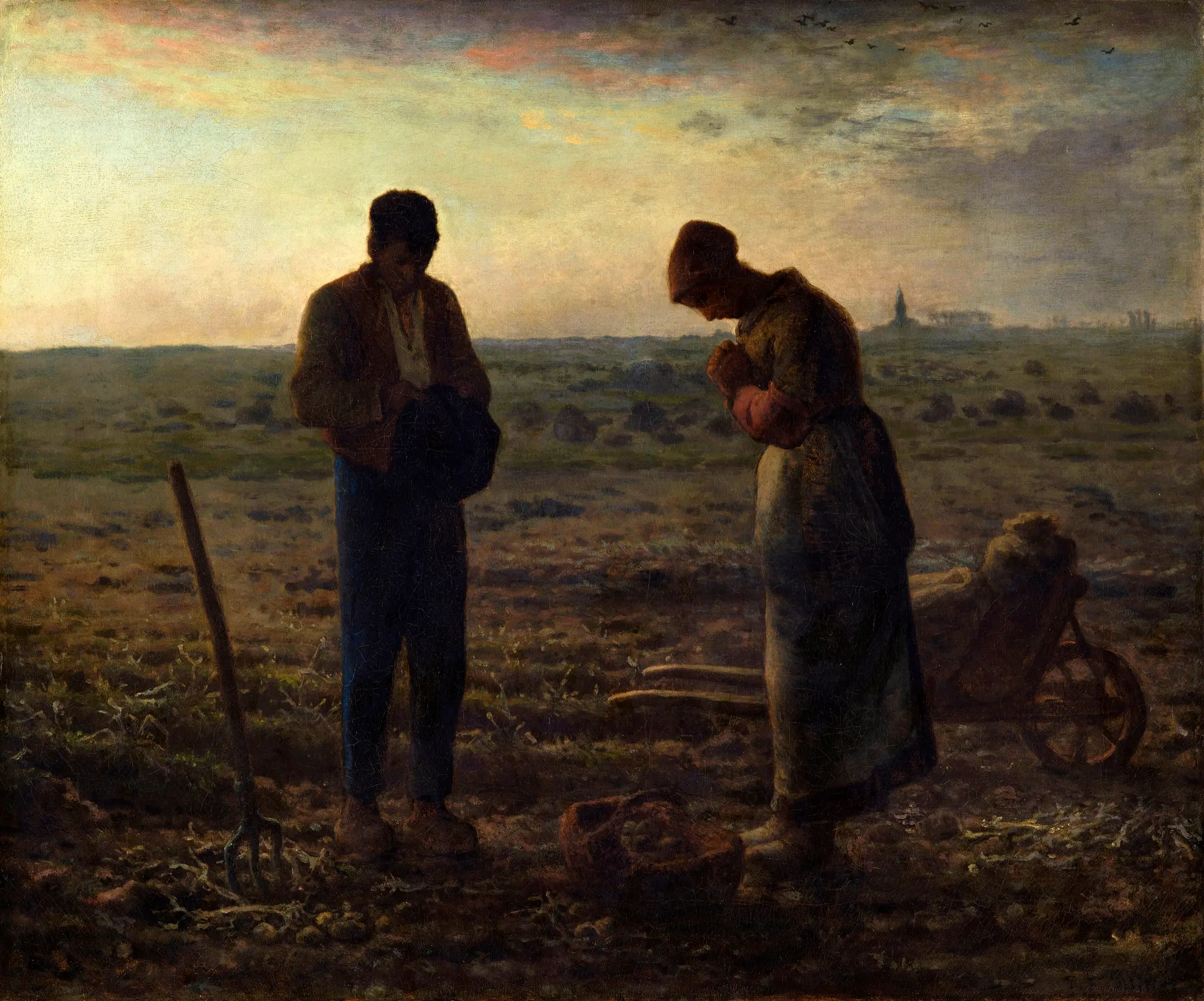
The Tradition of the Church proposes to the faithful certain rhythms of praying intended to nourish continual prayer. Some are daily, such as morning and evening prayer, grace before and after meals, the Liturgy of the Hours.
They have excellent means in the few, short, daily religious practices that have always been lived in Christian families and which I think are marvellous: grace at meals, morning and night prayers, the Holy Rosary (even though nowadays this devotion to our Lady has been criticised by some people).
I still pray aloud the bedside prayers I learnt as a child from my mother's lips, and I say so with the pride and gratitude of a son. They bring me closer to God and make me feel the love with which I learned to take my first steps as a Christian.
A few minutes can be found each day to come together before the living God, to tell him our worries, to ask for the needs of our family, to pray for someone experiencing difficulty, to ask for help in showing love, to give thanks for life and for its blessings, and to ask Our Lady to protect us beneath her maternal mantle. With a few simple words, this moment of prayer can do immense good for our families.
Holiness in little things
What a praying family teaches its children: holiness is not postponed to adulthood. It is practiced today — study done well, obedience, small services at home — little things done for the love of God.
Are you a parent or grandparent? Be holy by patiently teaching the little ones how to follow Jesus.
Do everything for Love. Thus there will be no little things: everything will be big. Perseverance in little things for Love is heroism.
Do you really want to be a saint? Carry out the little duty of each moment: do what you ought and concentrate on what you are doing.
Begin tonight — grace at the table, night prayers together, a decade of the rosary. From the home, the commandment reaches outward.
The Fourth Commandment · back to top
Beyond the Home
What a man learns at home he carries everywhere: a true filial spirit toward the Church and the Holy Father, and honest, responsible citizenship.
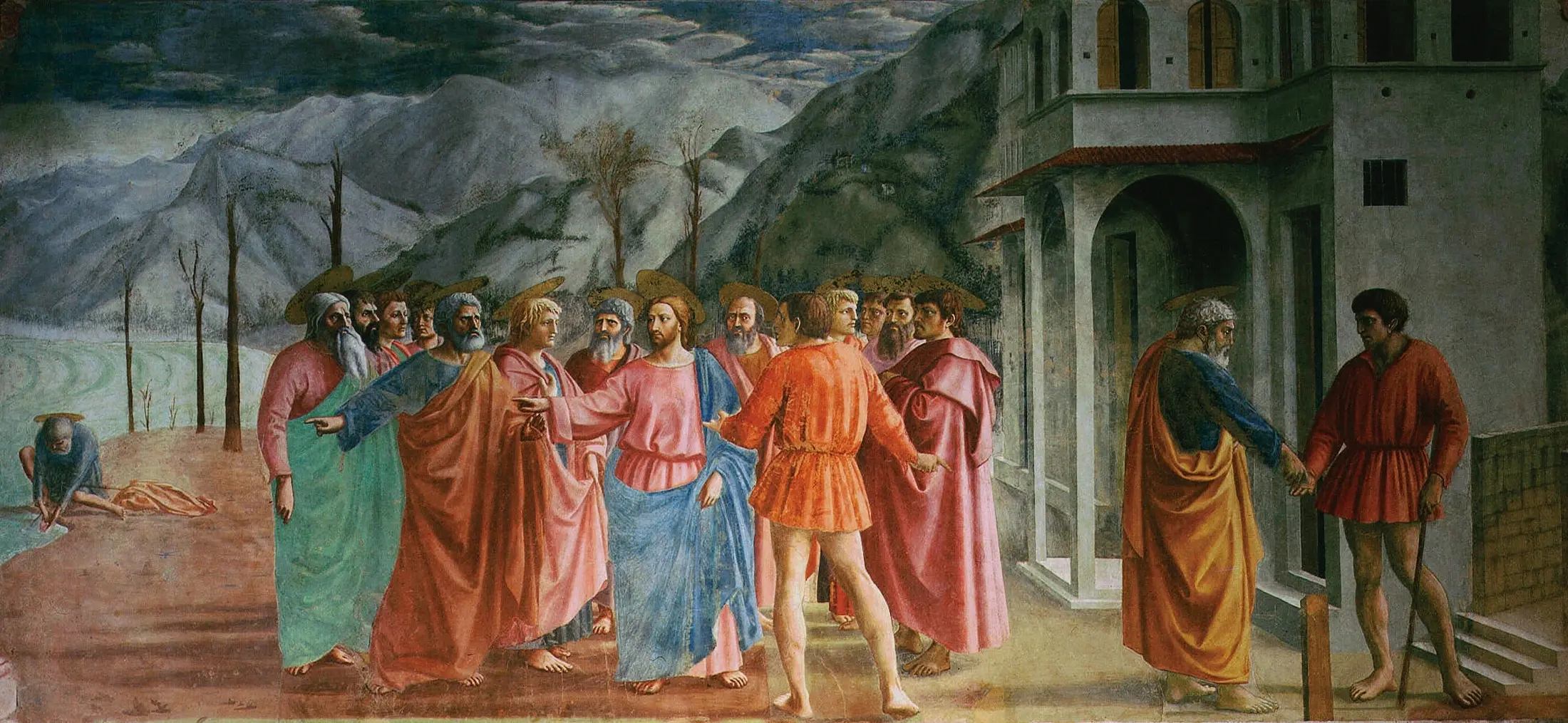
Render therefore to Caesar the things that are Caesar’s, and to God the things that are God’s.
The Fourth Commandment · back to top
Where the Family Draws Its Strength
Nothing the commandment asks is carried alone. The love that holds a home together is God’s own — given to the family, concretely, in the sacraments.
Reconciliation
The first gift a husband and father can give his family is his own reconciliation with God — a father living in the state of grace.
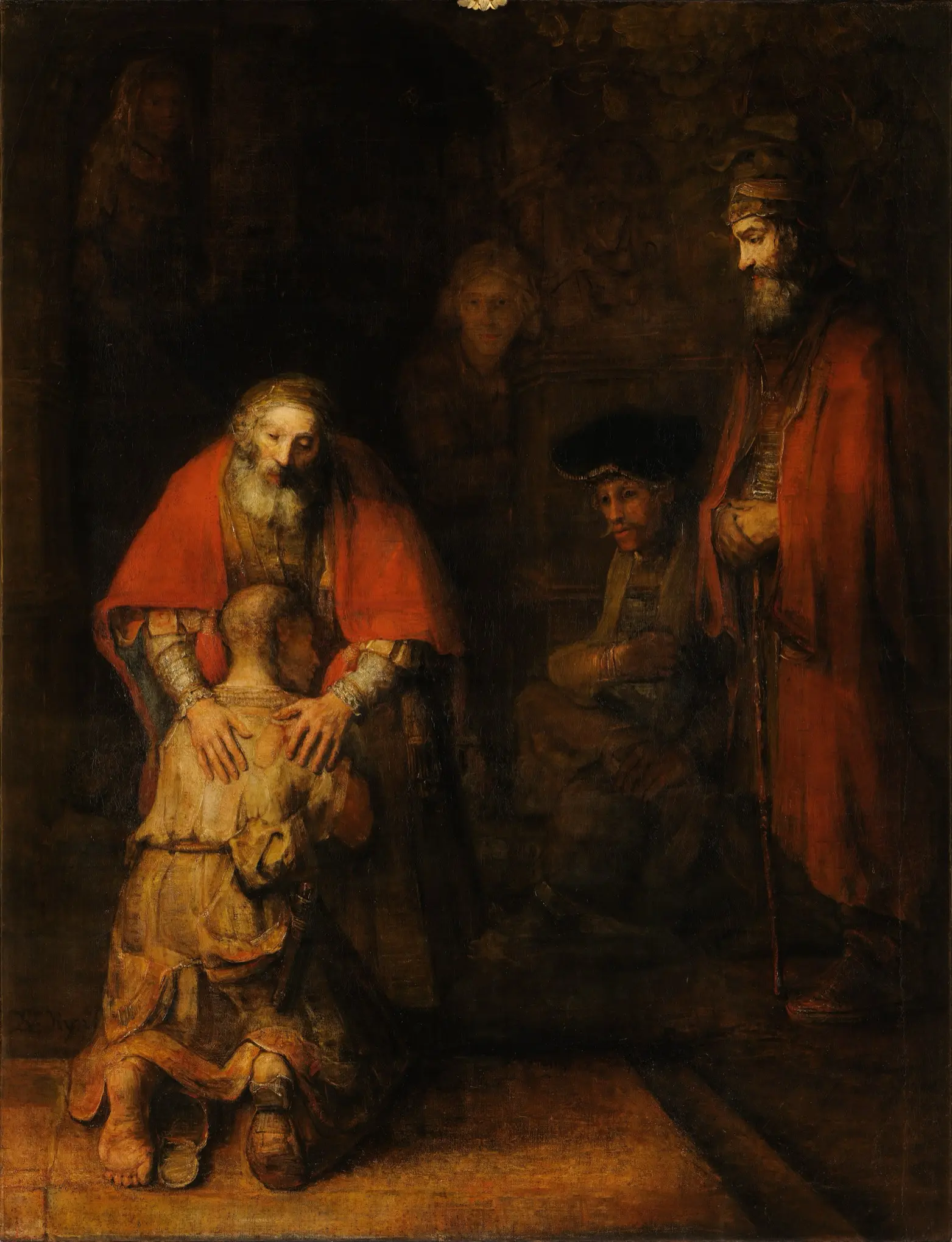
God never tires of forgiving us; we are the ones who tire of seeking his mercy.
"The whole power of the sacrament of Penance consists in restoring us to God's grace and joining us with him in an intimate friendship." Reconciliation with God is thus the purpose and effect of this sacrament.
The Eucharist
And when we receive our Lord himself, the family receives its strength.
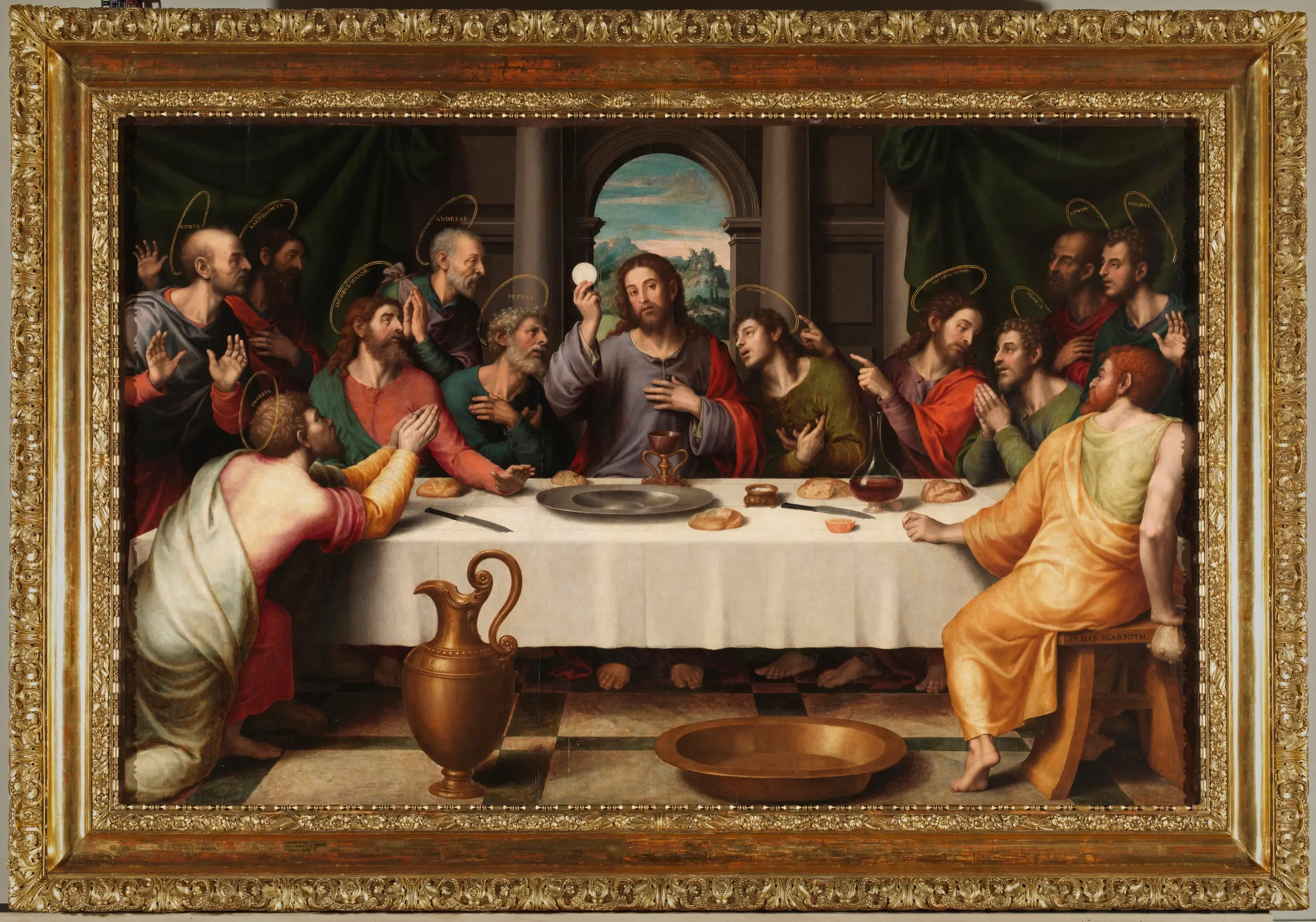
The Eucharist is the very source of Christian marriage. The Eucharistic Sacrifice, in fact, represents Christ's covenant of love with the Church, sealed with His blood on the Cross.
The Eucharist is "the source and summit of the Christian life." "The other sacraments, and indeed all ecclesiastical ministries and works of the apostolate, are bound up with the Eucharist and are oriented toward it. For in the blessed Eucharist is contained the whole spiritual good of the Church, namely Christ himself, our Pasch."
The family’s communal journey of prayer culminates by sharing together in the Eucharist, especially in the context of the Sunday rest.
The commandment began at home, where love of God and love of neighbor meet. The home, in turn, lives from the altar. Bring your family there — everything the commandment asks, the Eucharist supplies.